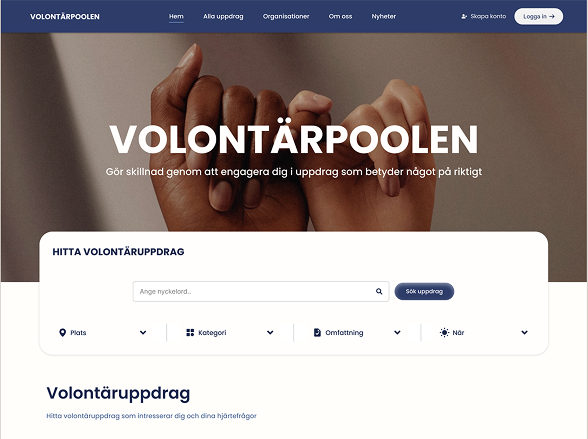
Volontärpoolen
A platform to connect volunteers with organizations.
Goal
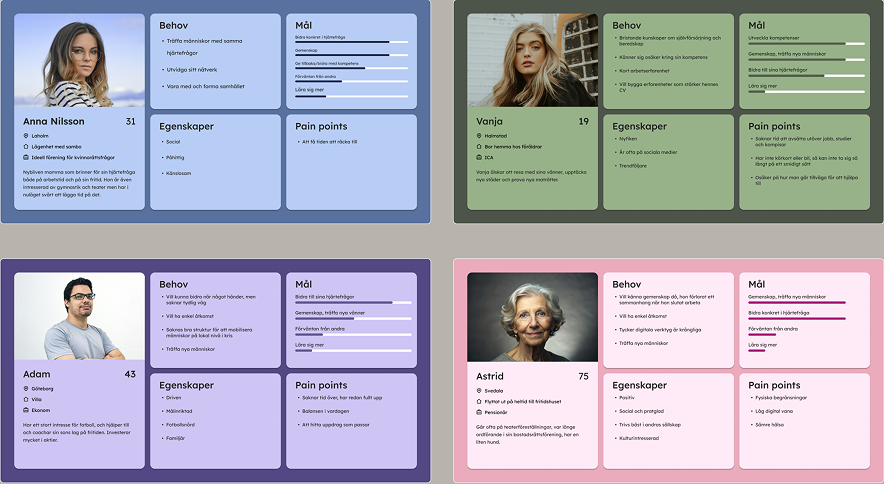
To create a digital platform designed to bridge the gap between non-profit organizations and individuals eager to volunteer. By facilitating seamless matching during both everyday life and times of crisis, the platform aims to strengthen social cohesion and enhance community resilience throughout the region of Halland. The stakeholders also wanted three personas representing common prospects for volunteering in the region.
Context
A real case as a part of an academic project in cooperation with Lokalt Ledd Utveckling Halland.
Duration
10 weeks
Scope
The project initiated with an analysis of the stakeholder's (LLUH) brainstorming sessions, followed by a prioritization process to define the project scope. Given our timeframe, we decided to focus on three areas: enabling organizations to post and manage volunteer opportunities, allowing volunteers to search and apply for roles, and taking into account how to use the platform for mobilization in times of crisis.
Research and requirements
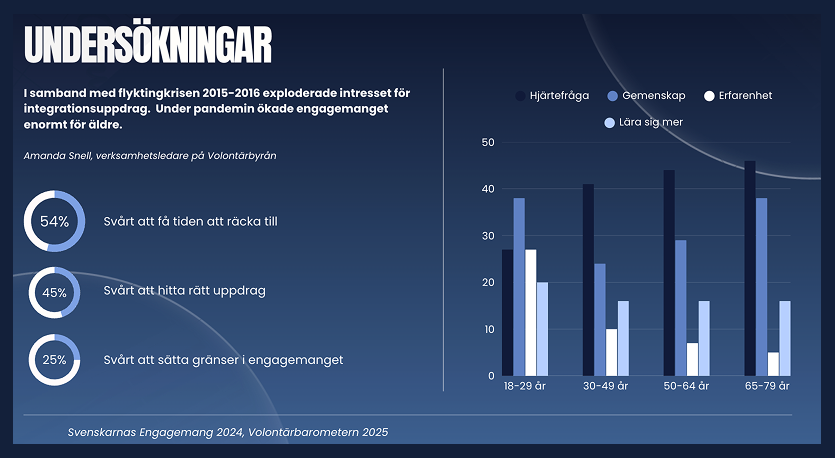
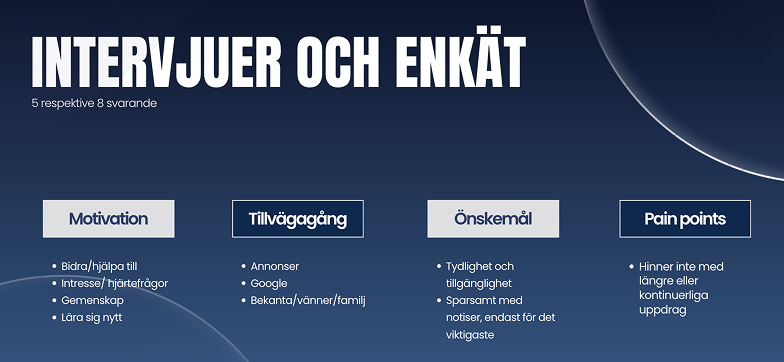
We began by reviewing existing research in the field, identifying clear correlations between ongoing crises and increased engagement. We also uncovered common barriers to volunteering, as well as the primary motivators for seeking out volunteer roles and how these factors vary across different age groups. We also conducted interviews and sent out a survey, where the answers confirmed our initial research and also gave some more insight to where people look for volunteer roles and what they are missing today.
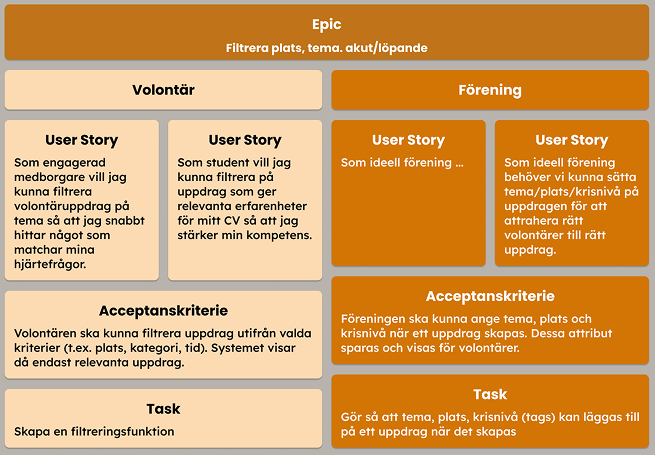
Based on the prioritized requirements and our initial research, we developed User Stories and Acceptance Criteria, an example of which is shown below.
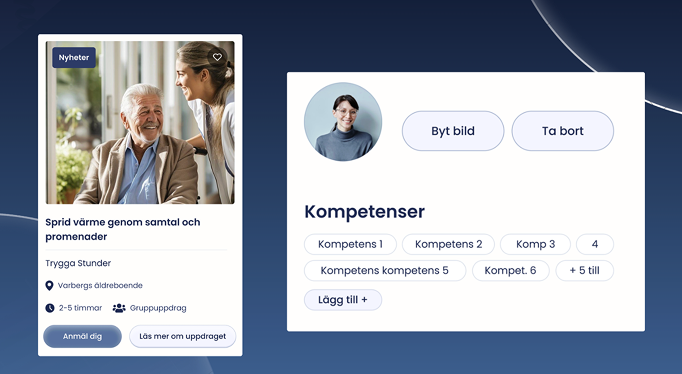
Insights and synthesis
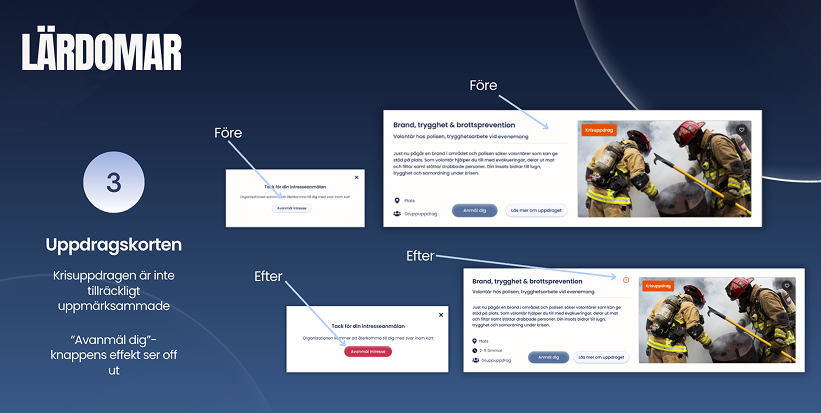
Based on these insights, we decided to design informative task cards that clearly display time requirements and whether the task is performed in a group. Additionally, we implemented a feature allowing volunteers to list skills on their profiles, which can subsequently be verified through completed assignments. We also made additional design decisions.
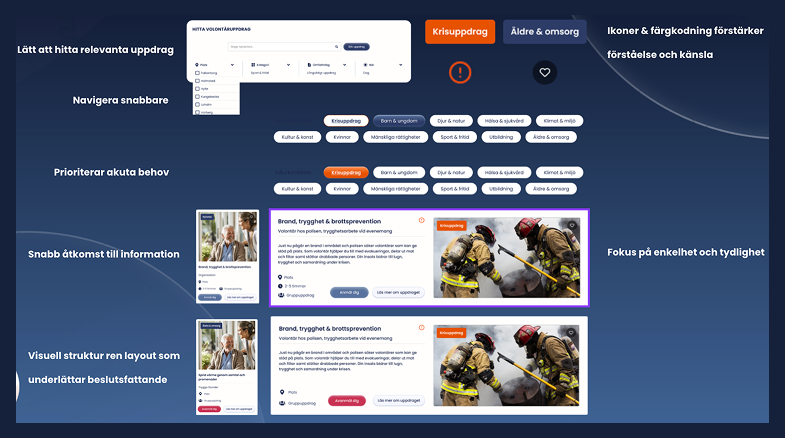
Our design system is built on principles of simplicity and clarity to provide a clean overview, enabling rapid information intake and efficient prioritization during crisis situations.
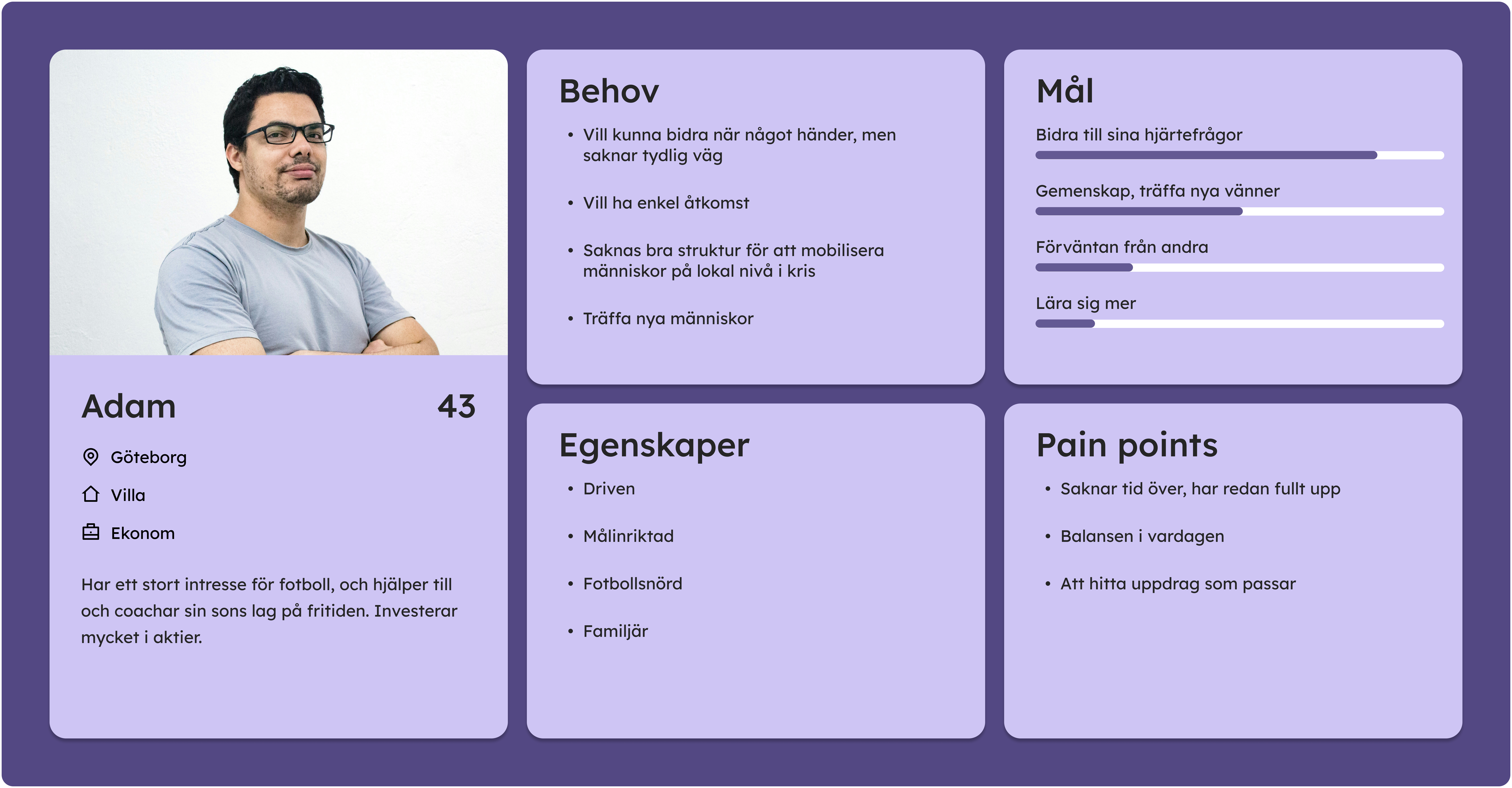
Our comprehensive research resulted in several personas, one of whom we named Adam. Based on the needs, motivators, and pain points identified, we concluded that the target audience consisted of four distinct user types.
Testing and iteration
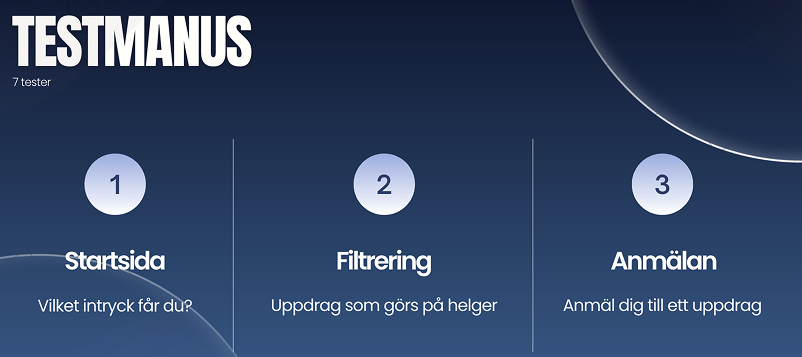
The timeframe gave us the opportunity for a round of testing followed by iterations from the results. Below you can see the tasks given to the users. The learnings could be divided into three different themes.
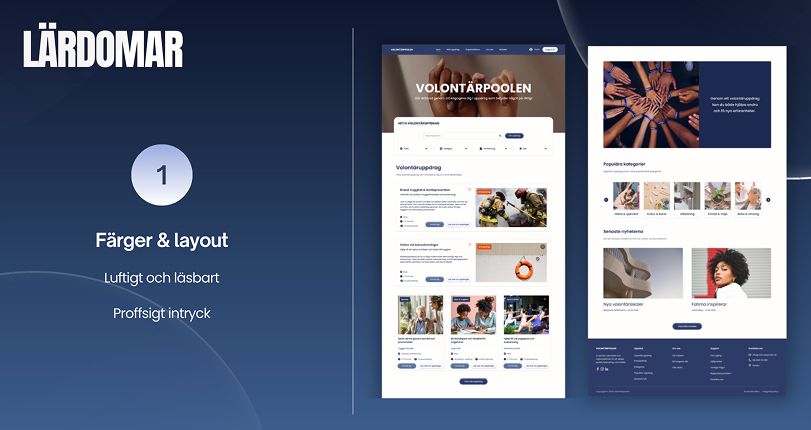
Many users gave us positive feedback regarding the look and feel of the website, saying it looked professional and was easy to read.
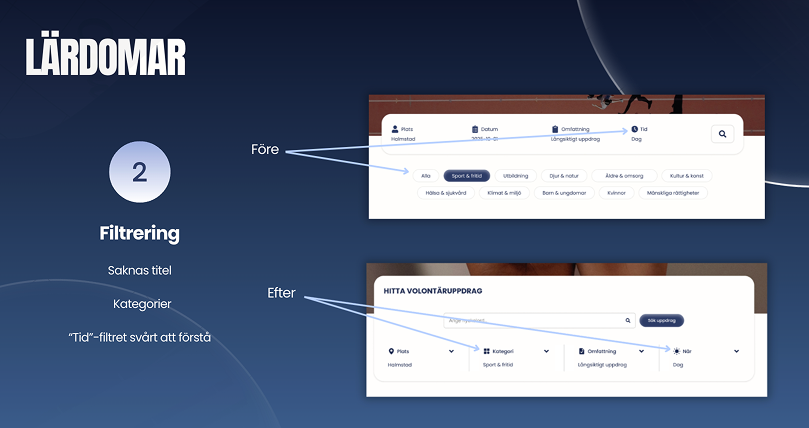
It became clear during the testing that our filtering system was causing confusion. Things like a missing titel and the naming of the filter options ("When" instead of "Time") and to not have two different types of filter (dropdown and pills) was changed.
We also made the cancellation button more prominent and clarified the implications of withdrawing from an assignment. Additionally, we enhanced the clarity of task cards for crisis-related roles, ensuring vital information stands out without significantly altering the overall visual aesthetic.